How Much House Can You Afford in Frisco on $150K?
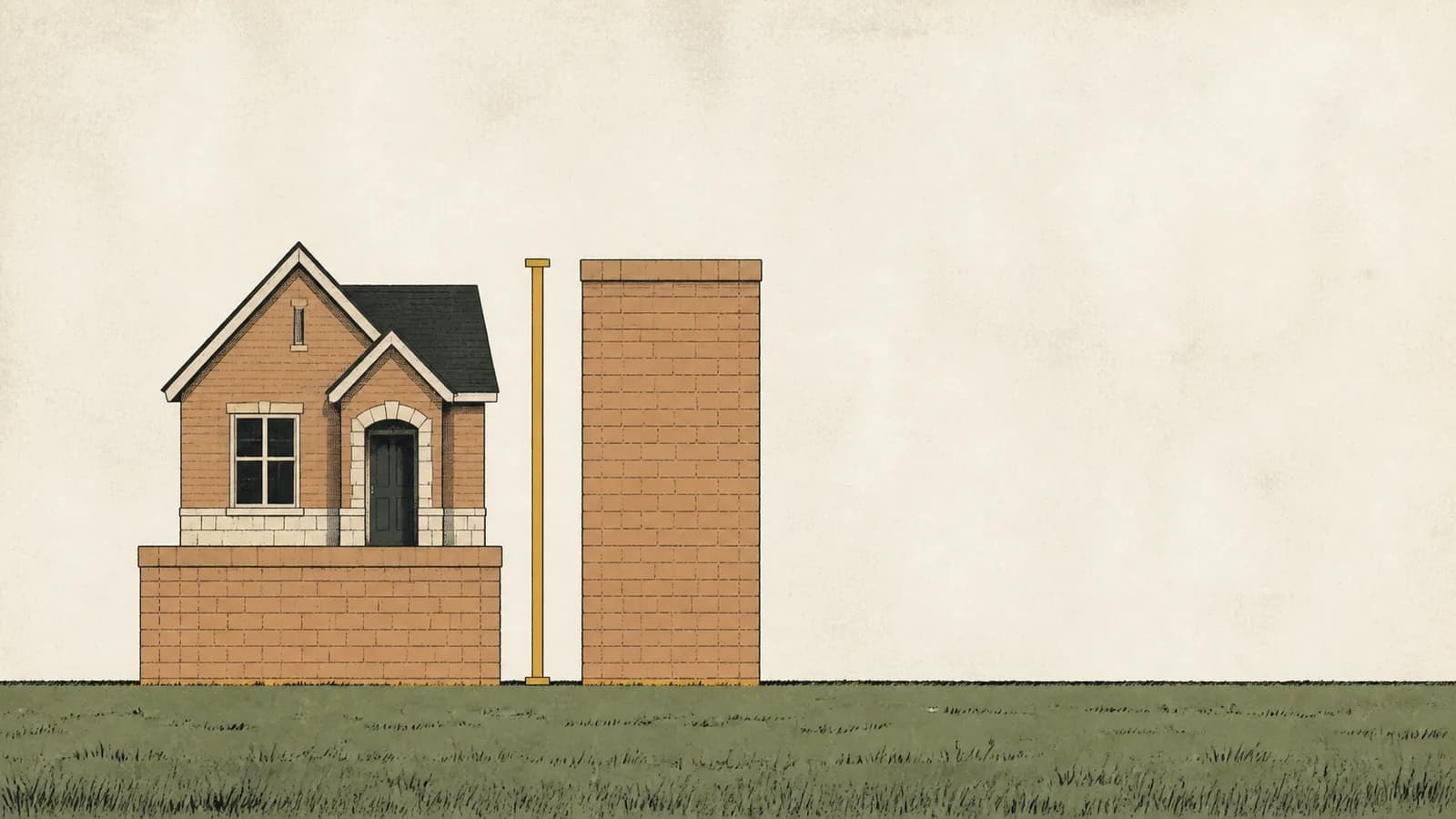
About $477,000 - against a Frisco median of $656,300. Here’s the arithmetic, why the two DTI limits disagree by $250,000, and what to do about the gap.
About $477,000. The median Frisco house is $656,300. That gap is the whole conversation.
“How much house can I afford” gets answered two ways online, and neither is useful. The first is a multiple of income - three times, four times - which ignores rates, taxes, and your existing debt. The second is whatever a lender will approve, which is a ceiling on their risk, not a budget for your life.
Here is the actual arithmetic, on Frisco's real tax rate at July 2026 rates, with every assumption stated so you can argue with any of them.
The Short Answer
Household income of $150,000 is $12,500 a month gross. Assume $500 a month in other debt payments - a car, a student loan - and 20% down at a 6.55% 30-year fixed.
| Working the limit | Amount |
|---|---|
| Gross monthly income | $12,500 |
| 28% front-end limit (housing only) | $3,500 |
| Less property tax (1.68%/yr) | -$668 |
| Less insurance (0.9%/yr) | -$358 |
| Left for principal & interest | $2,474 |
| Supported purchase price | ~$477,000 |
Note how much of that $3,500 never reaches the house. Tax and insurance take $1,026 a month - just under 30% of the entire housing budget - before a dollar goes to principal or interest. That is the Texas trade, and it is why national affordability rules of thumb consistently overstate what you can buy here.
The Two Limits, and Why They Disagree
Lenders apply two ratios, and almost nobody explains that they produce wildly different answers.
The front-end ratio caps housing at 28% of gross income: $3,500 a month, which is the figure above. The back-end ratio caps all debt at 43%: $5,375 a month, less your $500 car payment, leaving $4,875 for housing.
Run the same math at $4,875 and the supported price is about $730,000.
So the honest answer to “what can I afford on $150,000 in Frisco” is a range from $477,000 to $730,000, and which end you land on depends on which rule your lender applies. Many will work to the back-end number. That does not make it wise - it means a quarter of a million dollars of the answer is a judgment call about how much of your income should go to a house, and the lender is not the right person to make it.
The affordability calculator runs both limits and shows you which one is binding for your situation, along with what your credit score does to the answer through mortgage insurance.
Where the Texas Money Goes
Frisco's effective combined property tax rate is about 1.68%. That is genuinely low for this metro, and the reason is structural rather than political: Collin County funds no hospital district. Its cities - Frisco at 1.68%, Plano at 1.71%, McKinney at 1.75% - all sit well below Dallas County peers like Garland at 2.39% and Rowlett at 2.51%.
This is worth internalizing because the folk wisdom has it backwards. People assume the newer exurban communities are the high-tax ones. On the base rate they are not.
The real exposure is what the base rate excludes. MUD, PID, and MMD levies are parcel-specificand do not appear in any city-level figure. A home inside one can clear 2.7% all-in, which on a $477,000 purchase is roughly $400 a month of additional tax - about $54,000 of purchasing power. In Frisco's newer sections this is common enough that you should assume it applies until someone shows you otherwise.
Insurance is the other line people underestimate. DFW runs near 0.9% of value per year, repriced hard on hail and severe storm losses, and it is not a number that trends down.
The Frisco Gap
Frisco's median single-family value is $656,300 - the highest of any city covered on this site except Prosper. The conservative affordability figure on $150,000 is $477,000. There is a $179,000 gap between them.
What that means practically: on this income you buy in Frisco, but you buy in its lower tiers - townhomes, older sections, smaller lots. You do not buy the median detached house in a newer master-planned community, and no amount of shopping changes that.
Which is why the most useful thing to do with this number is often to widen the map:
| City | Median value | Tax rate | vs. $477K budget |
|---|---|---|---|
| Frisco | $656,300 | 1.68% | Below median only |
| Allen | $499,600 | 1.77% | Just under |
| Plano | $507,600 | 1.71% | Just under |
| McKinney | $484,100 | 1.75% | Within reach |
| Richardson | $455,200 | 2.18% | Comfortably |
Watch Richardson in that table. The lowest price and the highest tax rate, which partly cancel - a reminder that comparing cities on sticker price alone is close to meaningless here. Compare the all-in monthly cost instead.
The Four Levers That Actually Move It
- Paying off consumer debt. Under the back-end limit, every $100 of monthly debt you clear returns roughly $13,500 of purchasing power. That $500 car payment is costing you about $67,000 of house.
- Your credit score. Below 20% down, mortgage insurance spans roughly 0.19% to 1.86% of the loan annually depending on score and loan-to-value. Moving from the middle of that card to the top of it is worth tens of thousands in price - more than most people gain by shopping lenders.
- The down payment - but less than you think. Cash down mostly converts to equity rather than buying power, because the payment limit still binds. It matters most at the 20% threshold, where PMI disappears entirely.
- The address, not the city. Two Frisco houses at the same price can differ by $400 a month on MUD or PID exposure alone. This is the lever nobody looks at and the one most likely to change your answer.
Approved For vs. Should Spend
A pre-approval is calculated on gross income. Yours is not gross. Federal tax, retirement contributions, health insurance, and childcare all come out before you ever see the money, and none of them appear in a debt-to-income ratio.
A household at the $730,000 end of that range is committing roughly $4,875 a month to housing out of maybe $9,000 of actual take-home. That is survivable right up until the year it isn't - and North Texas prices are currently down about 5% year over year, which means the escape hatch of selling into an appreciating market is not currently open.
The number worth finding is not the maximum. It is the payment that still lets you fund retirement, keep six months of reserves, and absorb a $14,000 HVAC without a credit card. For most households on $150,000 that figure is nearer the front-end limit than the back-end one, which is exactly why the conservative answer leads this post.
Run your own inputs first. Then, if the Frisco gap is the problem, the conversation worth having is about which neighboring city gets you the house you actually pictured.
One more variable this page holds fixed but you should not. Everything above assumes a conventional loan, and the loan type moves the answer more than most buyers expect - the FHA limit in this metro is $563,500, which no longer reaches the Frisco median at all, and FHA mortgage insurance at 3.5% down never comes off the way conventional PMI does. If the down payment is what is binding, read how FHA, conventional, and VA actually compare in Texas before you settle on one.
Frequently Asked Questions
How much house can I afford on a $150,000 salary in Frisco?+
Roughly $477,000 with 20% down, using the conservative 28% front-end debt-to-income limit at a 6.55% rate and Frisco’s 1.68% effective property tax rate. A more aggressive lender working to a 43% back-end limit, with no other monthly debts, could stretch that to around $730,000. That $250,000 spread is not a rounding difference - it is the single biggest variable in the calculation, and it is decided by which rule your lender applies and how much other debt you carry.
Is $150,000 a good income to buy a house in Frisco?+
It is a solid income that lands below the Frisco median house. Frisco’s median single-family value is about $656,300, and the conservative affordability figure on $150,000 of household income is about $477,000. So $150,000 buys comfortably in Frisco’s lower price tiers, in townhomes and older sections, but not the median detached house that people picture when they picture Frisco. Neighboring McKinney at a $484,100 median and Allen at $499,600 both put the median house within reach on the same income.
What property tax rate should I use for Frisco?+
Frisco’s effective combined rate - city, county, school district, and college - is about 1.68% for the 2025 tax year, which is one of the lowest in the metro. The structural reason is that Collin County funds no hospital district, which is why Collin cities generally run well below their Dallas County neighbors, where Garland is 2.39% and Rowlett 2.51%. Important caveat: that 1.68% excludes MUD, PID, and MMD levies, which are parcel-specific and can add a full percentage point in newer developments. Always get the all-in rate for the specific address.
How much do I need for a down payment in Frisco?+
20% of $477,000 is about $95,400, and that is what the figure in this post assumes. You do not need it - conventional loans go to 3%, and FHA to 3.5% - but below 20% you add private mortgage insurance, which on this site’s rate card spans roughly 0.19% to 1.86% of the loan annually depending on your credit score and loan-to-value. That range is wide enough that your credit score moves your maximum purchase price more than almost any other input you can answer from memory. Budget separately for closing costs, which in Texas run about 2% for the buyer.
Why is my lender’s pre-approval higher than this number?+
Because a pre-approval answers a different question. It tells you the largest loan the lender is willing to risk, calculated from your gross income before taxes, retirement contributions, health insurance, or childcare - none of which appear in the debt-to-income ratio. It also does not know that you want to keep saving, or that your HVAC is fifteen years old. The pre-approval is a ceiling, not a target, and the gap between what you are approved for and what you should spend is where most buyer regret in this market comes from.
Does Frisco have HOA fees I should budget for?+
Most of it does, and in the newer master-planned communities they are not small - premium Frisco communities can run $200 to $400 or more a month, and some carry a separate PID assessment on top. Every dollar of HOA reduces your maximum purchase price by roughly $135 of house at current rates, so a $300 monthly HOA costs you about $40,000 of buying power. Get the actual dues and the resale certificate during your option period, and put the figure into the affordability math rather than treating it as a footnote.
Run Your Own Numbers
About the Author

Licensed Realtor · DFW North Texas
Specializing in Plano, Frisco, McKinney, and Allen. Helping buyers and sellers navigate North Texas since 2015, with honest advice, deep local knowledge, and no pressure.
You Might Also Like
Frisco vs Plano, TX: What the $168K Gap Buys (2026)
The honest Frisco vs Plano comparison for 2026. Frisco’s median runs ~$168K higher, but per square foot they’re nearly identical. Here’s what that tells you.
· 9 min read
Frisco vs Prosper, TX: How Families Should Choose (2026)
The real Frisco vs Prosper comparison for families in 2026 - real numbers, schools, and trade-offs, including the market surprise that flipped this year.
· 9 min read
Best Neighborhoods in Frisco, TX for Families (2026 Guide)
A local guide to Frisco’s best neighborhoods by budget, school zone, and lifestyle - from Stonebriar to the PGA corridor, where families want to live.
· 6 min read