Farmersville, TX Real Estate: The Far Edge of the Metro (2026)
A genuine small town with a brick-street square on the National Register, a small manufacturing base and one large new community. Also the longest drive.
If you want a small town rather than a subdivision with a sign at the entrance, Farmersville is one of the last real ones inside the reach of this metro.
A downtown on the National Register of Historic Places. A brick-street square. About four thousand people. Several small manufacturers headquartered in town, which is more of a local economy than most places out here have. And a drive that is genuinely long.
What Farmersville Actually Is
A small, old town at the far northeastern edge of Collin County, now sitting inside the path of the metro’s eastward growth. Roughly four thousand residents per the American Community Survey.
It differs from its neighbors in two ways worth naming. It has a real historic core, unlike Princeton and Lavon, which are essentially new construction. And its new-home market is one large master-planned community rather than a dozen competing ones. Sourced detail is in the Farmersville city guide.
The Square Is the Reason
Small towns with genuine historic centres are scarce and getting scarcer in this region, because the growth pattern of the last thirty years has been to build entirely new places rather than to extend old ones.
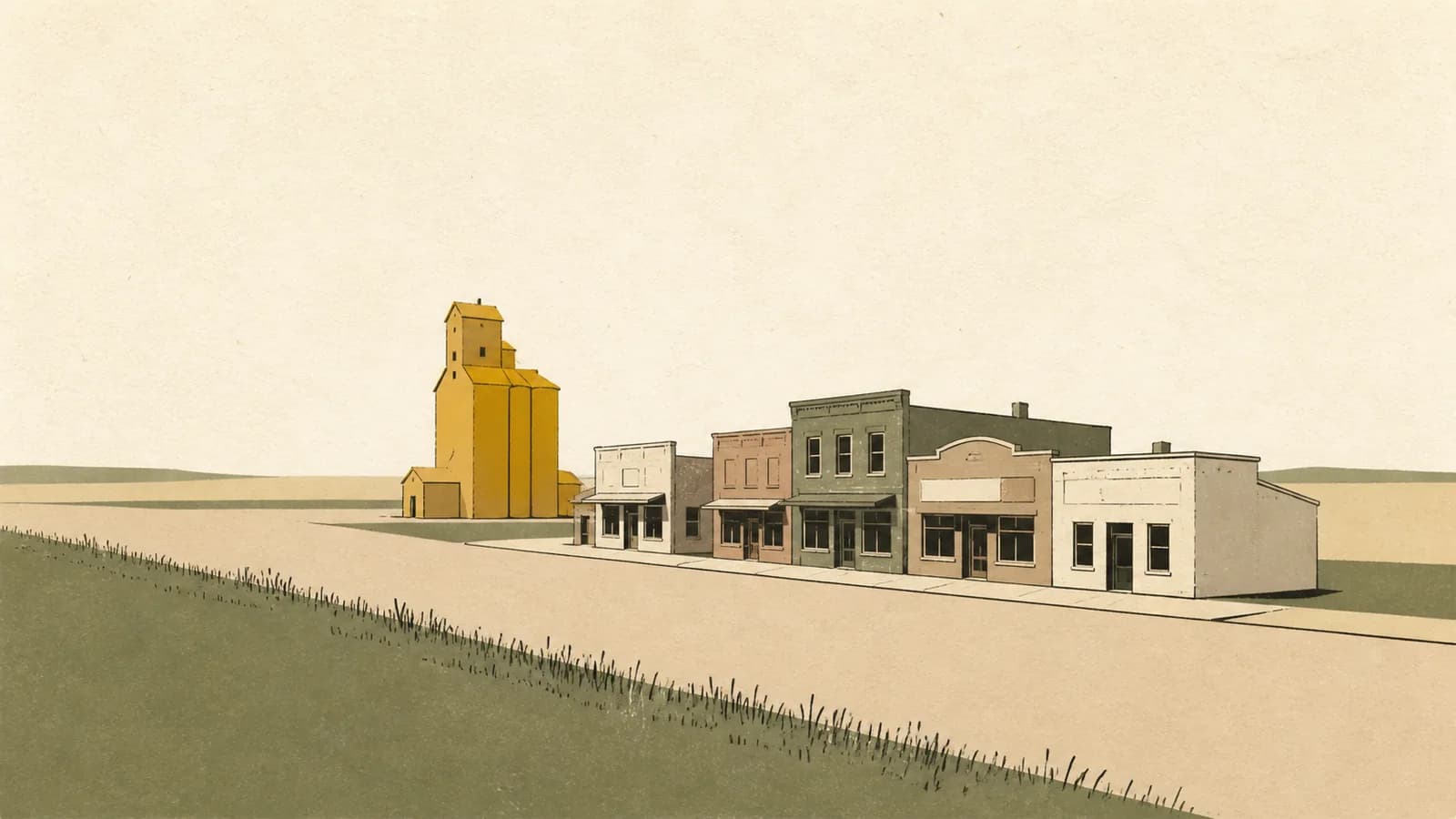
Farmersville has the thing that cannot be built: a nineteenth-century commercial core with brick streets, a National Register listing, and the accumulated texture that comes from a century and a half of continuous use. Celina and McKinney have squares of this kind at larger scale. Almost nowhere else out here does.
Whether that is worth the drive is a personal question and it is a legitimate one. Buyers who choose Farmersville are almost always choosing it for this, not for the price.
Be Honest About the Commute
This is the far northeastern edge of the metroplex. A daily drive to downtown Dallas is impractical for most people, and the Frisco and Plano job corridor is a long trip.
Do the arithmetic rather than the estimate. A forty-five minute each-way commute is roughly seven and a half hours a week, about 375 hours a year, plus fuel, maintenance and depreciation on a vehicle doing twenty thousand miles it would not otherwise do. Against that, the price difference from a comparable house in McKinney is real but finite.
If you work remotely, in Farmersville, or somewhere east or north, none of that applies and the town becomes a genuinely attractive option. The calculation is entirely about where you have to be. Which corridors actually move.
The Numbers, With Their Error Bars
Farmersville is small enough that every figure below carries a wide confidence interval, and quoting them without that would be the kind of false precision this town gets described with elsewhere.
Redfin’s May 2026 median sale price across all home types was about $294,800, up 1.7 percent year over year. In the same read, median price per square foot was $158, down 13.2 percent. Those move in opposite directions for a reason worth understanding: bigger new-build houses entering a small sample pull the median sale price up while pulling the per-foot figure down. The per-foot number is usually the better guide to whether your specific house is gaining or losing.
Population is roughly 4,000 on the ACS 2024 five-year estimate, far smaller and far slower-growing than Princeton or Lavon, though the Lakehaven community is now adding inventory faster than a five-year average can reflect. Median age is 37.3, with a margin of ±7.3 years - wide, but directionally older than Lavon at 33.9 or Princeton at 32.4, which fits an established town rather than a subdivision that appeared last year.
Mean commute is 30.8 minutes (±6.4). There is no freeway and no rail. This is the far northeastern edge of the metroplex, and the number understates what a Dallas or tollway-corridor commute actually costs from here, because most people working these jobs are not making that drive. Compare the commuter suburbs.
Schools are Farmersville ISD, four campuses in total. One district for the whole town, which is simpler than most of Collin County.
Buying Ahead of the Wave
Farmersville is in the path of growth rather than in the middle of it, which is a specific investment position with specific characteristics.
- The upside is real, because land at the edge is cheap and the metro has been moving outward consistently for decades.
- The timing is not under your control.The road widening, the retail, the new school campus all arrive on somebody else’s schedule.
- Liquidity is thinner. A small market has fewer buyers, which means longer marketing times if you need to sell.
- Holding period is the whole game. This is a ten-year position, not a three-year one. Why the holding period dominates.
One genuine advantage over Princeton, Anna or Lavon: with essentially one new community rather than many, there is less standing builder inventory competing with your resale when you eventually sell. That is a smaller problem here than anywhere else in the eastern corridor.
Who Farmersville Suits
It works well for: remote workers who want a real small town, buyers working locally or to the north and east, long-hold buyers comfortable being early, and anyone who has spent time in a town with a square and misses it.
It works badly for: daily commuters to the main job corridors, buyers who need established services and medical care close by, and anyone with a short or uncertain holding period.
The nearest comparisons are Princeton and Lavon, both closer in and both essentially new construction, and Wylie for buyers who want the same eastern-corridor value with a shorter drive.
Frequently Asked Questions
Is Farmersville, TX a good place to live?+
For buyers who genuinely want a small town with a centre to it rather than a subdivision with a sign at the entrance, Farmersville is one of very few real options left inside the metro's reach. It has a downtown on the National Register of Historic Places and a brick-street square. The trade is the commute, which is the longest of the eastern Collin County towns.
How big is Farmersville, TX?+
Roughly four thousand people per the American Community Survey, which makes it a genuinely small town rather than a small suburb. That scale is the appeal for the buyers who choose it, and it is also why services, retail and medical facilities are limited compared with anywhere further west.
Are there jobs in Farmersville, TX?+
More than in most towns its size out here. Unlike Princeton and Lavon, it has an actual local employment base in the form of several small manufacturers headquartered in town. That does not make it self-sufficient, and most residents still commute, but it does mean the town is not purely a bedroom community.
Is there new construction in Farmersville?+
Its new-home market is essentially one large master-planned community rather than the many competing subdivisions found in Princeton, Anna or Lavon. That has a practical implication: less builder competition to negotiate against, and less standing inventory competing with you if you later need to resell.
How far is Farmersville from Dallas?+
It sits at the far northeastern edge of the metroplex on US 380, which makes a daily downtown Dallas commute impractical for most people and a drive to the Frisco and Plano corridor a substantial one. This is the single factor that decides whether Farmersville works for you.
Run Your Own Numbers
About the Author

Licensed Realtor · DFW North Texas
Specializing in Plano, Frisco, McKinney, and Allen. Helping buyers and sellers navigate North Texas since 2015, with honest advice, deep local knowledge, and no pressure.
You Might Also Like
Denton, TX Real Estate: The Cheapest Market and Why (2026)
Denton has the lowest median price and income on this blog - and 62,453 university students explain both. It’s also the strongest rental market in North Texas.
· 7 min read
Garland, TX Real Estate: The Affordable DFW Suburb (2026)
Garland, TX offers some of the best values in DFW - close to Dallas, with DART rail, lakefront options, and prices 30-40% below Plano for similar homes.
· 6 min read
Addison, TX Real Estate: The Metro’s Densest Four Square Miles
Seventeen thousand residents, a daytime population above 120,000, 82 percent renter-occupied, and for-sale stock that is mostly townhomes and mid-rise. Who it fits.
· 5 min read