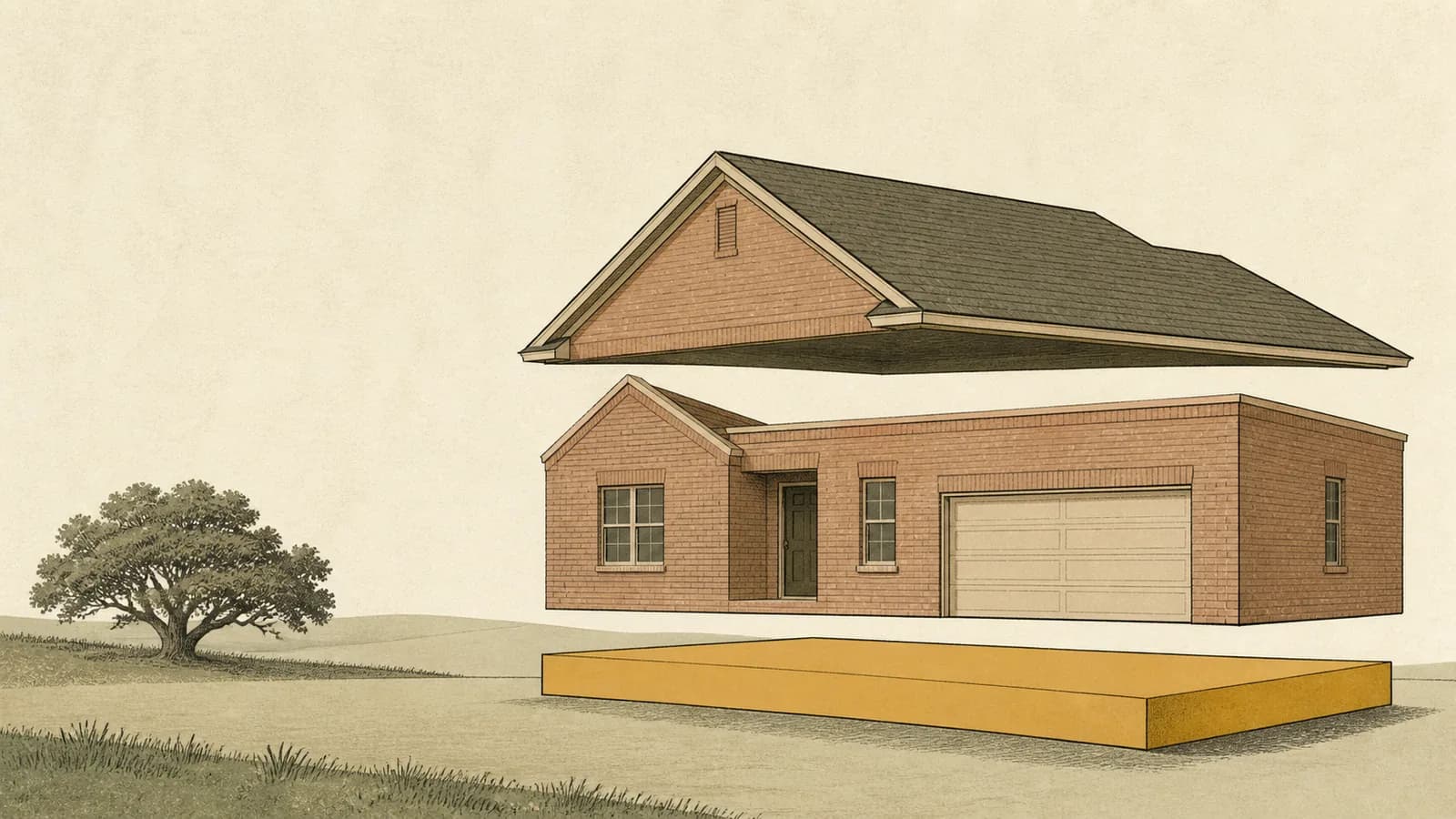
The Home Inspection in North Texas: What It Covers and What It Cannot
What a TREC-licensed inspector is required to report, what they are legally barred from telling you, and the specialist reports worth ordering in this region.
The inspection is the cheapest thing in the transaction and the only one capable of saving you a five-figure mistake. It is also routinely misunderstood in a way that costs buyers both money and sleep.
Two misunderstandings dominate. Buyers expect the inspector to tell them what a problem will cost to fix, which the inspector is not permitted to do. And buyers read a forty-item report and panic, when most of those items are the ordinary condition of a house that has been lived in.
What a TREC Inspection Actually Is
Texas licenses home inspectors and prescribes what they must do in the Texas Administrative Code. Your inspector is working to a published standard of practice, which is why two competent inspections of the same house look broadly similar.
The scope covers, at a high level:
- Structural systems, including the foundation, grading and drainage, roof covering, roof structure, walls, ceilings, floors, doors and windows
- Electrical systems, service entrance, panels, branch circuits and devices
- Heating, ventilation and air conditioning
- Plumbing systems, supply, drains, water heating and fixtures
- Appliances that are present
For each, the inspector renders a written opinion as to whether the system is performing its intended function and reports deficiencies that are visible and accessible.
Two words there are doing a lot of work. Visible: they are not opening walls. Accessible: they are not moving your seller’s stored boxes to reach a panel. An inspection is a thorough visual survey, not a forensic investigation.
What Your Inspector Cannot Tell You
This is the part that surprises nearly everyone, and it is a matter of law rather than caution.
- What caused a structural condition, or how to fix it. Under 22 TAC 535.228(a) an inspector must render a written opinion as to the performance of the foundation and report visible indications such as doors that will not latch, sloping floors and cracked masonry cladding. But the Texas Board of Professional Engineers, in Advisory Opinion 43, holds that analysing the cause of a condition or recommending repairs is the practice of engineering. A TREC inspector may not give you an engineering opinion on a foundation unless they also hold a PE licence.
- What anything will cost. Inspectors are not estimators and a number from one is not a bid. Get two real bids from contractors.
- How long something will last. They report present condition, not remaining life.
- Whether you should buy the house.That is your decision and your agent’s advice, not theirs.
The practical consequence: if the inspection flags foundation movement, the next call is a structural engineer, and that is a separate engagement costing money and taking days. Which is the real argument for negotiating an option period long enough to absorb one rather than the shortest one that wins the offer.
The Specialist Reports Worth Ordering Here
| Report | When to order it |
|---|---|
| Sewer scope | Any house old enough for cast iron drain lines. The single highest-value optional inspection in established North Texas neighborhoods |
| Structural engineer | Whenever the general inspector reports foundation movement |
| Roof evaluation | On any older roof, because it drives your insurance as much as your repair budget |
| HVAC specialist | On systems near the end of a normal service life |
| Septic | Essential on acreage properties in Lucas, Fairview, Parker and the rural fringe |
| Pool inspection | Any property with a pool, which is a separate mechanical system |
One carve-out specific to slab country worth knowing before you need it: hydrostatic testing must be separately authorised by the seller in writing. You cannot order it unilaterally under paragraph 7A. A plumbing leak under a slab is one of the common causes of foundation movement here, so if the inspector flags something, ask early and in writing rather than discovering the restriction on day eight of a ten-day option.
How to Read the Report Without Panicking
Every inspection report on a house older than about ten years reads like a catalogue of failure. It is not. Sort the findings into four buckets:
- Safety. Electrical hazards, gas issues, structural risk. These get addressed, always, by someone.
- Expensive and imminent. A roof at the end of its life, an HVAC system that will fail this summer, a sewer line that is failing. Real money, near term.
- Expensive and eventual. Systems with years left. Budget them; do not negotiate them.
- Everything else. Loose handrails, missing GFCI outlets, a cracked tile, worn caulk. This is the ordinary condition of a used house and it is most of the report by item count.
A good agent is worth their fee at exactly this moment, because the skill is knowing which bucket each item belongs in and what each one actually costs in this market.
Negotiating Off an Inspection
Four ways to handle findings, roughly in order of how well they work:
- Ask for a price reduction. Usually the cleanest. You control the repair, the contractor and the standard, and there is nothing to inspect afterwards.
- Ask for a closing cost credit. Similar effect, helps if you are cash-constrained rather than payment-constrained. Watch the loan program contribution cap.
- Ask the seller to repair. Works for licensed trade items where the work needs to be done before closing anyway. Specify who does it and to what standard, or you will be unhappy with the result.
- Accept it and move on. Underrated. On a house you want, in a market with competition, asking for everything is how you lose it.
One structural point: your leverage comes from the option period, not from the inspection. What gives you the ability to renegotiate is the unrestricted right to walk away, which expires. How that right works and how to keep it.
Timing It Against the Option Period
The sequence that works, on a ten-day option:
- Day 1: order the general inspection. Not day three.
- Days 2 to 3: inspection happens, report arrives.
- Days 3 to 5: order any specialists the report calls for, and get contractor bids.
- Days 5 to 8: negotiate.
- Day 9: decide. Do not leave this to day 10.
Two reminders that cost buyers their walk-away right every year. The option period is counted in calendar days, and its expiry does not roll forward off a weekend, unlike the delivery deadlines in the same paragraph. A 5:00 p.m. Sunday deadline is a 5:00 p.m. Sunday deadline.
What comes after, week by week, is in the post-option timeline. And if the inspection turns up foundation movement, read what is normal and what is not before you react to it.
Frequently Asked Questions
What does a home inspection cover in Texas?+
A TREC-licensed inspector works to a standard of practice set in the Texas Administrative Code and reports on the structural systems, the electrical, heating, ventilation and air conditioning, plumbing, and appliances. They render a written opinion on whether each system is performing its intended function and note visible deficiencies. It is a visual, non-invasive inspection of what is accessible.
Can a home inspector tell me what is wrong with the foundation?+
They can tell you it is not performing and describe what they see, and they cannot tell you what caused it or what it would take to fix. Under 22 TAC 535.228(a) an inspector must render a written opinion on foundation performance and report visible indications. But the Texas Board of Professional Engineers, in Advisory Opinion 43, treats analysing the cause of a condition or recommending repairs as the practice of engineering.
How much does a home inspection cost in Texas?+
It varies with the size and age of the house and by inspector, and it is the least expensive money in the entire transaction relative to what it can save. Skipping it to save a few hundred dollars on a purchase of several hundred thousand is the worst trade available to a buyer, and it is one people still make in competitive markets.
What inspections should I get in North Texas specifically?+
Beyond the general inspection, three earn their cost regularly here. A sewer scope on any house with cast iron drain lines. A structural engineer if the general inspector flags foundation movement. And a dedicated HVAC or roof evaluation on older systems, because both are expensive and both are hail and heat exposed in this region.
Can I ask the seller to fix everything on the inspection report?+
You can ask, and it is usually a bad strategy. A list of forty items signals that you do not know which four matter, and it invites a seller to refuse the whole thing. Pick the items that are safety, structural or expensive, ask for those, and be prepared to accept the cosmetic ones as part of buying a used house.
Run Your Own Numbers
About the Author

Licensed Realtor · DFW North Texas
Specializing in Plano, Frisco, McKinney, and Allen. Helping buyers and sellers navigate North Texas since 2015, with honest advice, deep local knowledge, and no pressure.
You Might Also Like
The Texas Option Period: Your Right to Walk Away (2026)
TREC changed the contract on July 1, 2026. The termination option is paragraph 5B, the fee goes to the title company, and one blank left empty voids the right.
· 12 min read
FHA vs Conventional vs VA in North Texas: The Real Trade-offs (2026)
The mortgage insurance rules decide this, not the down payment. FHA MIP at 3.5% down never comes off. Conventional PMI is cancellable by federal law.
· 11 min read
Rent vs Buy in Plano in 2026: The Honest Math
At 6.55% and a median Plano house of $507,600, renting is about $1,350 a month cheaper. Here’s the break-even, and the one assumption the whole answer turns on.
· 10 min read