Builder Incentives in North Texas: What They Give and What They Take
Almost every incentive is tied to the in-house lender or to standing inventory. How to price the trade honestly, and what is negotiable that nobody asks for.
On a new build, the price is largely fixed and everything else is up for discussion. That is the reverse of a resale, and buyers who arrive with resale instincts negotiate the wrong thing.
Why Builders Give Incentives Instead of Discounts
This is the mechanism that explains all builder behaviour and it is worth understanding properly rather than treating as obstinacy.
Every closing in a community becomes a recorded comparable sale. A builder who cuts a base price by $25,000 has created a comparable that affects appraisals and buyer expectations for every remaining house in that community, including ones that have not been framed yet.
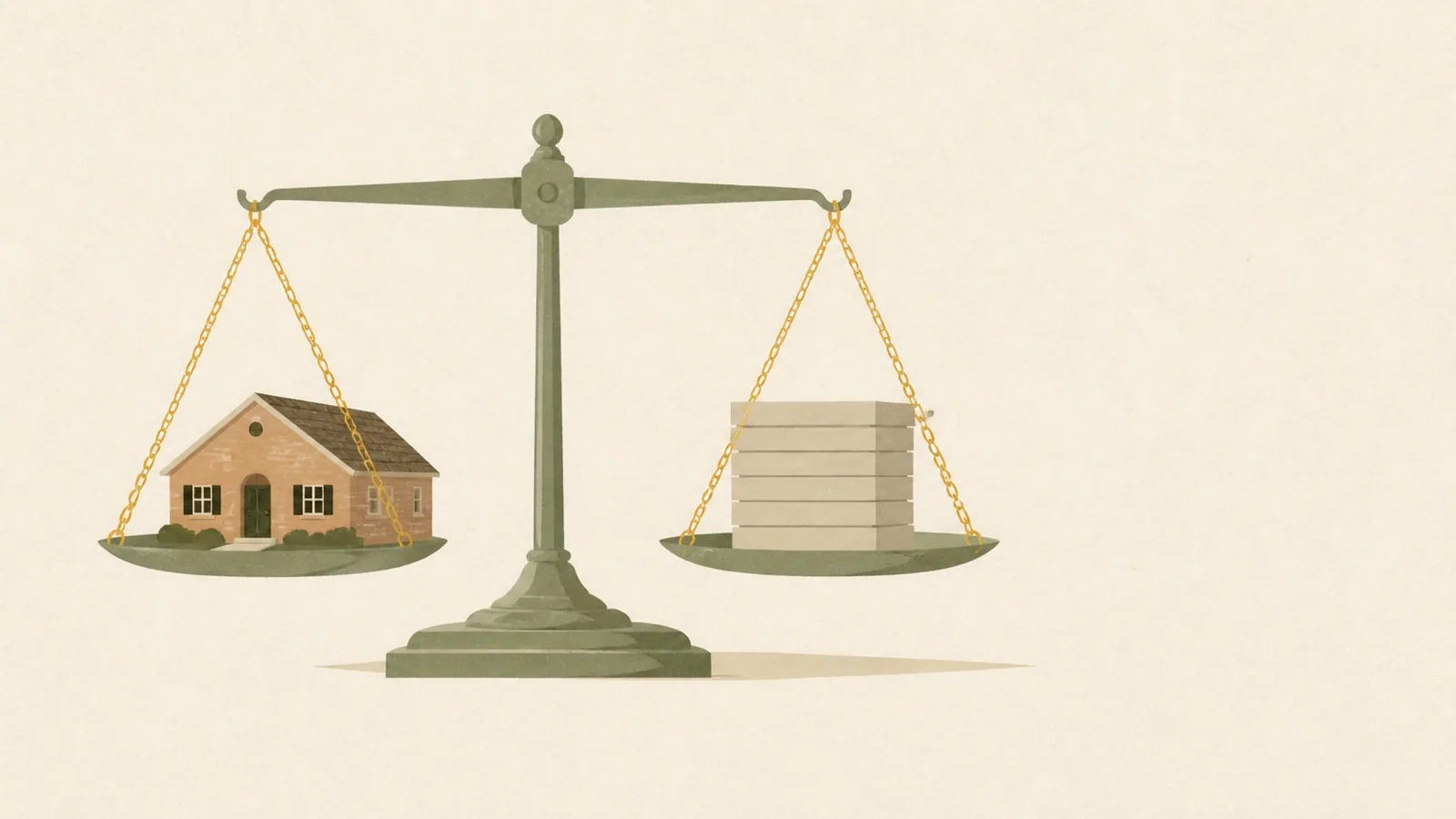
Value delivered through a rate buydown, closing costs or upgrades does not appear in the recorded price. It costs the builder the same money and it does not damage the comparable set. Which is why a builder will frequently hand you $25,000 of financing value rather than $15,000 off the price.
The practical implication for you: stop asking for a price reduction and start asking for a larger package, then convert the package into a number and compare. How to convert it.
The In-House Lender Condition
Almost every meaningful incentive is conditional on financing through the builder’s affiliated lender, and often on using their affiliated title company.
This is legal, disclosed and entirely normal. It is also the hidden cost of the offer, because:
- The affiliated lender may or may not be competitive, and there is no way to know without comparing.
- A quarter point of rate over thirty years is a large number, and it can quietly exceed the value of the incentive.
- Fees on the Loan Estimate differ substantially between lenders even at the same rate.
Get an outside Loan Estimate anyway. You are not obliged to use it, it costs you an hour, and it is the only way to know what the incentive is actually worth. Compare the standardised forms line by line rather than comparing quoted rates. How to read a Loan Estimate, and what actually sets a rate.
Two more things worth knowing. Affiliated business arrangements must be disclosed to you in writing, so ask for that disclosure. And in some cases builders will match or partially match an outside lender’s terms if you present them, which costs nothing to ask.
Standing Inventory Is Where the Money Is
A finished house that nobody has bought is costing the builder money every day in carrying costs, and it is sitting in their inventory report. That is the single strongest position a new-construction buyer can be in.
Ask directly:
- Which completed homes are still available in this community?
- How long has each been finished?
- What is available on that house that is not available on a build?
Incentives on standing inventory are routinely far larger than on a to-be-built house, because the builder is solving a different problem. The trade is that you take the finishes somebody else chose, which for a lot of buyers is not much of a trade at all.
The other side of that coin: in a fast-selling community with a waiting list, there is nothing to negotiate, and pretending otherwise wastes everybody’s time. Ask how many homes they sold last month before you decide how hard to push.
What Is Negotiable That Nobody Asks For
- The lot premium. Frequently waivable, and buyers treat it as fixed.
- Fencing, blinds, landscaping and appliances. Small individually, several thousand together, and you will buy them in month one anyway.
- An extended rate lock. On a build that will take months, a longer lock is worth real money and builders sometimes fund it.
- A pre-drywall inspection written into the contract. Some builders resist independent inspections. Get the right agreed in writing rather than argued about later. Why to inspect a new house twice.
- Completion date protections. What happens if the build runs months late, and what your remedy is. This matters more than most incentives if you are selling or ending a lease.
- A clear change-order and upgrade cut-off schedule, so you know when decisions become irreversible and expensive.
Timing, and the End of the Quarter
Builders are public companies or capital-backed operations with sales targets, and those targets are measured in periods. The consequences are predictable:
- End of quarter and end of year are the strongest times to negotiate, because closing one more unit is worth more to a regional manager than the margin on it.
- Late in a community’s build-out, when the builder wants to close the sales office and move the team.
- When standing inventory is elevated, which you can partly judge by walking the community and counting finished, empty houses.
None of that helps if the community is selling briskly. Read the situation honestly rather than applying a tactic, and remember that the whole exercise is worth doing precisely because the base price will not move. What you are negotiating is everything else.
Finally, whatever package you agree, model the year-two payment rather than the year-one one, because the tax escrow on a new build is almost always understated at closing. Why the payment jumps.
Frequently Asked Questions
Are builder incentives negotiable in Texas?+
The package usually is, even when the base price is not. Builders will move on closing costs, rate buydowns, upgrade allowances, lot premiums and occasionally on standing inventory pricing, and how much depends on their position in the sales cycle for that community. Ask for more than is on the sheet; the sheet is an opening position.
Why won't builders lower the base price?+
Because every closing becomes a recorded comparable sale that affects appraisals and negotiations for everything else they are selling in that community, including homes not yet built. Value given through financing or upgrades does not show up in the recorded price, which is why they would rather give more that way than less off the price.
Do I have to use the builder's lender to get incentives?+
Almost always, and that condition is the real cost of the offer. It is not necessarily a bad deal, and it is only knowable by getting an outside Loan Estimate and comparing total cost. An incentive that comes with an above-market rate can be worth considerably less than the number on the sign.
What is the best time to buy from a builder?+
End of quarter and end of year, when sales targets bite, and any point at which a builder holds finished inventory they are paying to carry. A completed spec home that has been standing for two months is the strongest negotiating position a new-construction buyer can be in.
Are upgrade allowances a good deal?+
Sometimes. Structural upgrades that must be done during construction are genuinely worth taking through the builder. Cosmetic finishes are usually marked up substantially, and the same work costs considerably less after closing. Prefer allowances toward structural items and take the cosmetic ones in cash or rate instead where you can.
Run Your Own Numbers
About the Author

Licensed Realtor · DFW North Texas
Specializing in Plano, Frisco, McKinney, and Allen. Helping buyers and sellers navigate North Texas since 2015, with honest advice, deep local knowledge, and no pressure.
You Might Also Like
Builder Rate Buydowns in North Texas: Read the Whole Offer
A 2-1 buydown, a permanent rate buydown and a price concession are three different things worth three different amounts. How to compare them on one number.
· 6 min read
PID Assessments in North Texas: What Outlasts the Builder
A public improvement district repays infrastructure through your tax bill for decades. How to find one before you offer, and what paying it off really costs.
· 6 min read
North Texas Master-Planned Communities: How to Compare Them
Amenity centres, trail miles and an HOA that runs like a small government. What the assessments buy, what they do not, and how build-out changes the deal.
· 5 min read