Homeowners Insurance in North Texas: Hail, Roofs, Deductibles
One of the most expensive places in the country to insure a roof. What a schedule endorsement does to a claim, and how to shop coverage before you close.
Insurance is the ownership cost North Texas buyers most consistently underestimate, and it is the one that is easiest to check in advance and hardest to fix afterwards.
It is also a market where the premium is the least interesting number on the page. The terms attached to the roof are worth more than a few hundred dollars of annual premium in either direction.
Why It Is Expensive Here
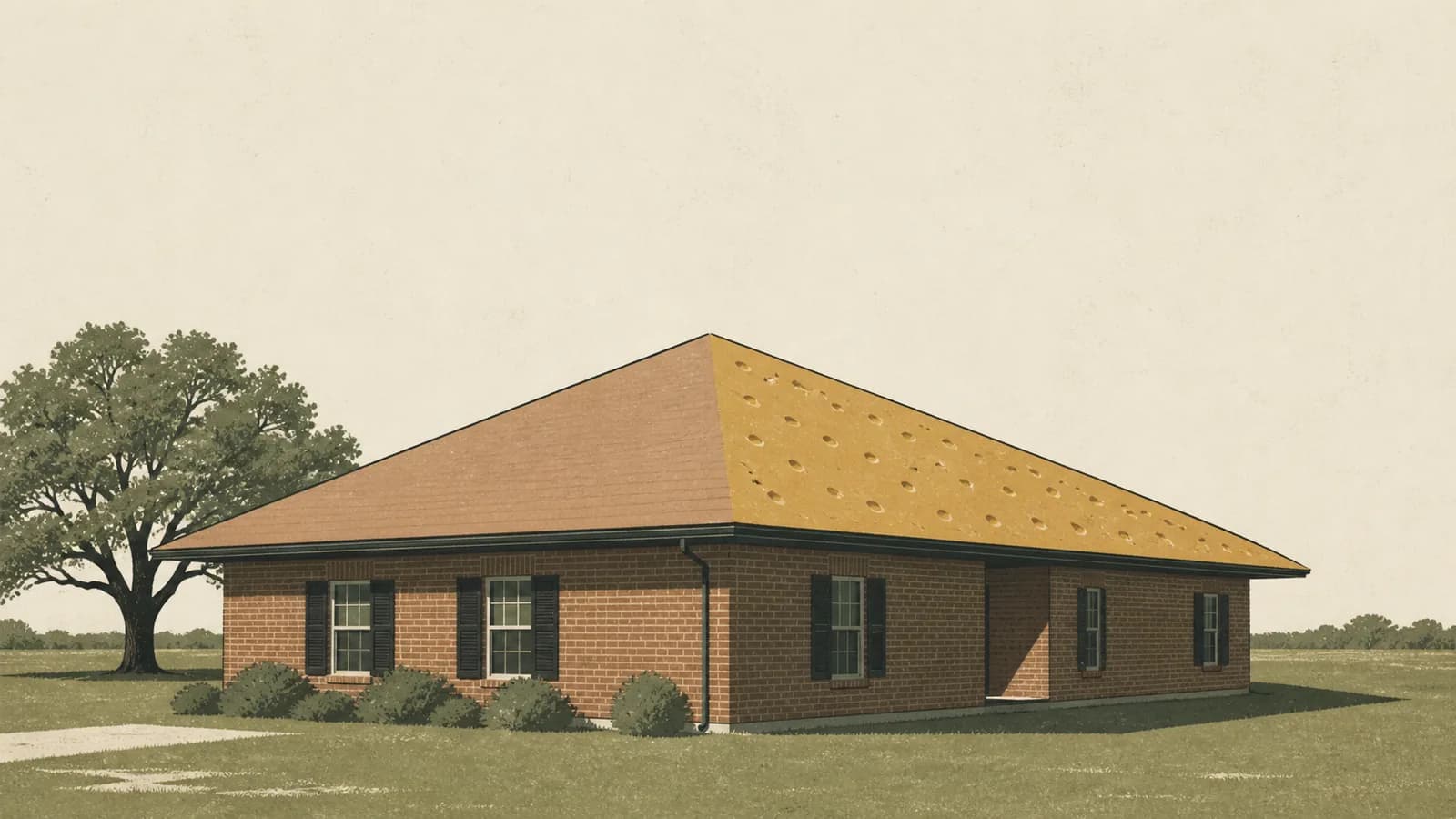
North Texas sits in one of the most hail-exposed corridors in the country. Hail events here are frequent, geographically concentrated and capable of damaging thousands of roofs in an afternoon.
Three consequences flow from that, and all three affect you:
- Premiums are high relative to national averages, and they have been rising faster than general inflation.
- Roof coverage has been progressively restructured to shift depreciation risk onto the homeowner. This is where most of the real change has happened.
- Wind and hail deductibles are frequently percentage-based rather than flat dollar amounts, which makes them much larger than people expect.
Which is why insurance belongs in your total cost of ownership model alongside the mortgage and the property tax, not as an afterthought. Model all four in the mortgage calculator.
The Texas Department of Insurance publishes a consumer guide to homeowners insurance covering what a standard policy excludes, which endorsements are offered, and how replacement cost differs from actual cash value. Read it alongside your own policy, because the endorsements you carry are what decide your outcome, not the general rule.
The Roof Endorsement That Changes Everything
This is the most important paragraph on this page, and most homeowners do not know which version they have.
| Roof coverage basis | What the insurer pays on a claim |
|---|---|
| Replacement cost | What it costs to put a new roof on, less your deductible |
| Actual cash value, or a roof payment schedule | The depreciated value of the roof given its age, less your deductible |
On a roof that is a decade or more into its life, that difference can be most of the cost of replacement. A homeowner who assumed replacement cost, and had a schedule endorsement, gets a fraction of what they expected and pays the rest.
Ask your agent, in writing, which basis your roof is covered on. If it is depreciated and replacement cost is available, price the difference. It is frequently the best value in the entire policy in this region, and it is a term rather than a premium so it is invisible on a quote comparison that only shows the annual cost.
Percentage Deductibles
Texas policies commonly carry a separate wind and hail deductible expressed as a percentage of the dwelling coverage amount rather than as a dollar figure.
A two percent wind and hail deductible on a house insured for $500,000 is $10,000. That is the amount you pay before the policy contributes anything on a hail claim, and it is the single most common surprise after a storm.
Two implications worth acting on:
- Know the number in dollars, not in percent. Do the multiplication when you buy the policy and write it down.
- Keep the deductible amount available. A high deductible lowers your premium and is only a rational choice if you could actually pay it.
What Is Not Covered by Default
- Flood. Never covered by a homeowners policy. Separate coverage, and worth considering even outside a mapped flood zone, because a large share of flood losses occur outside them. Check the FEMA map for the parcel.
- Earth movement, including foundation and slab damage. The Texas Department of Insurance notes this is generally excluded, with foundation coverage available as an optional endorsement. In expansive clay country that is not a theoretical exclusion. Why foundations move here.
- Water damage of certain kinds, including gradual leaks and sewer backup, which is frequently a separate endorsement.
- Wear, deterioration and maintenance. An old roof that has simply reached the end of its life is not a claim.
What to Do Before You Close
- Get a real quote during the option period, on the actual address, not an estimate on a similar house. It is free and it takes one call.
- Ask for the property’s claim history.Insurers can see prior claims on a property, and a history of them affects both price and availability. A seller can also be asked directly, and the seller’s disclosure asks about it. What the disclosure covers.
- Establish the age of the roof. It drives the premium, the coverage basis available, and in some cases whether a carrier will write the policy at all.
- Compare on terms, not just premium. Roof coverage basis, wind and hail deductible in dollars, and which endorsements are included.
- Bundle if it helps, and check the actual saving rather than assuming.
- Confirm the policy is bound and effective from the closing date, and that the title company has the binder. A missing binder delays funding. The pre-closing timeline.
If a quote comes back much higher than expected, or a carrier declines, treat that as information about the house rather than about the insurer. It usually means the roof, a claims history, or a condition issue, and all three are things you would want to know before your option period ends.
Whether to File a Claim
After a hail event, roofing contractors will canvass the neighborhood offering free inspections. Some are excellent. All of them are paid when a roof is replaced, which makes them interested rather than neutral advisers on whether you should file.
Before filing, work out:
- Your wind and hail deductible in dollars.
- The likely payout given your roof coverage basis. Depreciated value on an older roof can be well below replacement cost.
- The realistic replacement cost from an independent quote.
- What a claim does to your premium and to your insurability, which in this market is a real consideration rather than a theoretical one.
If the likely net payout is modest relative to the long-run cost, paying for a repair yourself can be the better decision. If the roof is genuinely destroyed, file.
For sellers, one related note: a documented recent roof replacement is one of the more valuable things you can present to a buyer in this market, because it solves their insurance problem as well as their repair problem. Which repairs return their cost.
Frequently Asked Questions
Why is homeowners insurance so expensive in North Texas?+
Hail. This region sits in one of the most hail-prone corridors in the United States, and hail claims are frequent, large and concentrated. Insurers price for that exposure, and they have also progressively restructured roof coverage to limit it, which is why the policy terms matter here as much as the premium does.
What is an actual cash value roof endorsement?+
It changes roof claim payouts from replacement cost to depreciated value, meaning the insurer pays what the roof was worth given its age rather than what a new one costs. On an older roof that difference can be most of the cost of replacement, and it is the single most consequential term in a North Texas policy.
What is a percentage deductible on a Texas homeowners policy?+
It is a deductible expressed as a percentage of the dwelling coverage amount rather than as a flat dollar figure, and wind and hail deductibles here are commonly set that way. On a house insured for $500,000, a two percent wind and hail deductible is $10,000 out of pocket before the policy pays anything.
Does a standard Texas policy cover earth movement?+
Generally not as standard. The Texas Department of Insurance notes that earth movement is typically excluded and that foundation and slab coverage is an optional endorsement. Read your own policy rather than assuming, and ask specifically about the endorsement when you shop, particularly on an older house.
Should I file a hail claim on my roof?+
Not automatically. Compare the likely payout after your wind and hail deductible against the cost of the repair, and weigh the effect of a claim on future premiums and insurability. On a large deductible and a modest amount of damage, a claim can cost more over time than it pays, and a roofing contractor is not a neutral adviser on that question.
Run Your Own Numbers
About the Author

Licensed Realtor · DFW North Texas
Specializing in Plano, Frisco, McKinney, and Allen. Helping buyers and sellers navigate North Texas since 2015, with honest advice, deep local knowledge, and no pressure.
You Might Also Like
The Texas Disabled Veteran Property Tax Exemption
At a 100 percent rating a homestead can be fully exempt from property tax. The partial tiers, the surviving spouse rules, and how to claim it.
· 6 min read
North Texas Weather and Your House: Hail, Heat, Clay and Drainage
Four local conditions that show up in inspection reports, insurance premiums and repair bills here more than almost anywhere else in the country.
· 5 min read
Moving to DFW From Out of State: What Nobody Tells You First
Property tax, insurance, HOA layers, and the fact that the metro is not one market. The orientation a relocating buyer needs before touring anything.
· 6 min read