Pros and Cons of Living in Prosper, TX (2026, No Sugarcoating)
Big lots, a well-funded district, some of the highest household incomes in North Texas, and a town still being built around you. The honest version.
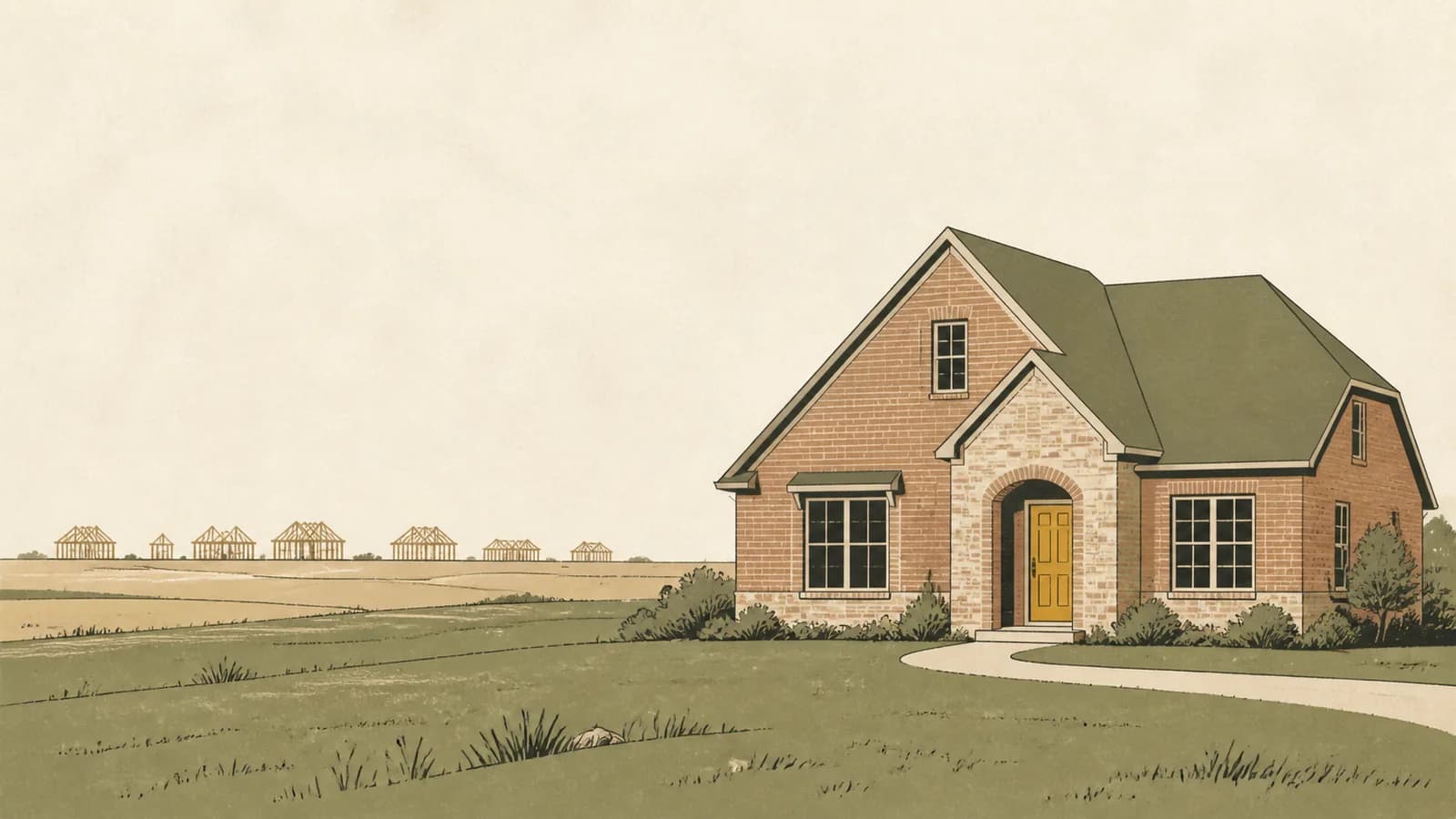
Prosper is what happens when a town decides early what it wants to be and then holds the line on it for twenty years.
Large lots, large houses, a strong district, and almost nothing else. It is one of the least commercially developed towns of its income level anywhere in Texas, and that is a deliberate choice with real advantages and real costs.
What Prosper Actually Is
Just under fifty thousand people and growing quickly, spanning Collin and Denton counties. Median household income around $195,000 and homeownership at roughly 88 percent per the American Community Survey five-year averages. Those two figures together tell you almost everything: this is an affluent, overwhelmingly owner-occupied, almost entirely residential town.
Most of it is Prosper ISD; the southwest corner is Denton ISD. Sourced detail is in the Prosper city guide and the market picture is in Prosper real estate.
The Pros, Honestly Stated
- Lot sizes you cannot get further south. This is the single clearest differentiator. The same money that buys a zero-lot-line house in west Frisco buys genuine yard in Prosper.
- Prosper ISD is well funded and has been through the growth curve. Multiple high schools, a performance record at scale, and a name that carries weight with relocating buyers, which matters on resale.
- Newer housing stock throughout. Which means current construction standards, warranty coverage on the newest, and no deferred maintenance to inherit.
- Deliberate, low-density planning. The town has been unusually protective of its character, and the result is visible: wide setbacks, consistent standards, and a sense of space that most of Collin County no longer has.
- Closer to the jobs than Celina. Ten to fifteen minutes matters a great deal when it is twice a day, five days a week.
The Cons Nobody Puts in a Brochure
- Total cost of ownership, not price. High combined tax rate, hail-market insurance, HOA dues, and frequently a PID assessment. Four lines, and buyers routinely budget only for the first two. Model all of it in the mortgage calculator.
- Almost everything is a drive. Low-density residential planning means groceries, restaurants and services are trips rather than walks. The retail base has improved substantially and it is still thinner than Frisco or McKinney.
- Construction is ongoing. Less than in Celina, more than in Allen. Dust, trucks and unfinished amenity centres are part of the experience in the newer sections.
- The commute south is long. To Dallas or the airport corridor this is a genuinely large daily cost. To Legacy or Frisco it is manageable.
- Big houses cost money to run. Five thousand square feet in a Texas summer is a real utility bill, and a large lot is a real irrigation bill. Ask for twelve months of actual utility costs.
- Prosper ISD is not the same shape as the town. The district extends into Frisco and Celina, which confuses buyers in both directions.
The Tax and Assessment Question
This is the part of a Prosper purchase most worth doing carefully, because two houses at the same price in this town can have materially different annual costs.
Before you compare any two specific properties, get for each:
- The combined rate for the exact taxing units at that address
- Whether there is a PID assessment, how much it is, and how many years remain on it
- Whether there is a MUD, and where it sits in its debt cycle
- HOA dues, and what they cover
A PID in particular can persist for decades and is not always obvious from a listing’s tax estimate. The explainer for all three, and how to pull the authoritative rate.
One more, specific to new construction anywhere in this corridor: the first-year tax bill is often assessed against a lot rather than a finished house, which produces an escrow shortage and a payment jump in year two. Why your payment jumped.
Who It Suits and Who Should Look Elsewhere
Prosper suits you if: you want land and square footage, you have children who will be in the district for a decade, your work is in the northern job corridor or remote, and your budget carries the full monthly cost comfortably rather than exactly.
Look elsewhere if: you commute to Dallas daily, in which case Plano or Richardson will give you your evenings back. If you want walkability or a town centre, Celina has a square and McKinney has a real downtown. If you want the amenity density, Frisco has it. And if you want more house per dollar and can live through a longer build-out, Celina is the direct alternative: the full comparison.
Frequently Asked Questions
Is Prosper, TX a good place to live?+
For families who want a large house on a large lot in a well-funded district and can carry the cost, it is one of the strongest options in North Texas. Household incomes and homeownership rates are among the highest in the metro, at roughly $195,000 median income and 88 percent owner-occupied per the American Community Survey five-year averages.
What are the disadvantages of living in Prosper?+
Cost first: the total monthly burden including taxes, insurance, HOA and any special district assessment is high. Then the commute, which is long to Dallas and moderate to the Legacy corridor. Then ongoing construction, since parts of the town are still being built. And it is almost entirely residential, so most services are a drive away.
Is a Prosper address always Prosper ISD?+
No. Most of the town is Prosper ISD, but the southwest corner falls in Denton ISD. Separately and more confusingly, Prosper ISD extends well beyond the town limits into parts of Frisco and Celina, so a Prosper ISD campus is not proof of a Prosper address and vice versa. Confirm the specific property with the district.
Is Prosper expensive?+
Yes, by North Texas standards. It has some of the highest household incomes in the metro and housing prices that reflect that. The part buyers underestimate is not the price but the carrying cost: a high combined tax rate, hail-market insurance, HOA dues, and in many communities a PID assessment on top.
How long is the commute from Prosper to Dallas?+
Realistically forty-five minutes to an hour to downtown at peak, and roughly twenty-five to thirty-five minutes to the Legacy West and Frisco employment corridor depending on where in town you are. Prosper is meaningfully closer to those jobs than Celina and meaningfully further than Frisco.
Run Your Own Numbers
About the Author

Licensed Realtor · DFW North Texas
Specializing in Plano, Frisco, McKinney, and Allen. Helping buyers and sellers navigate North Texas since 2015, with honest advice, deep local knowledge, and no pressure.
You Might Also Like
Prosper, TX Real Estate: Is It Worth the Drive? (2026)
Prosper, TX is one of Collin County’s fastest-growing towns. What buyers should know about prices, schools, commutes, and whether it’s the right move.
· 6 min read
Selling a House in Prosper: Pricing a Thin, High-Dollar Market (2026)
Prosper’s median swung from $790K to $869K in two months on a few sales. In a thin luxury market, the peak month is a trap - here’s how to price right.
· 7 min read
Frisco vs Prosper, TX: How Families Should Choose (2026)
The real Frisco vs Prosper comparison for families in 2026 - real numbers, schools, and trade-offs, including the market surprise that flipped this year.
· 9 min read