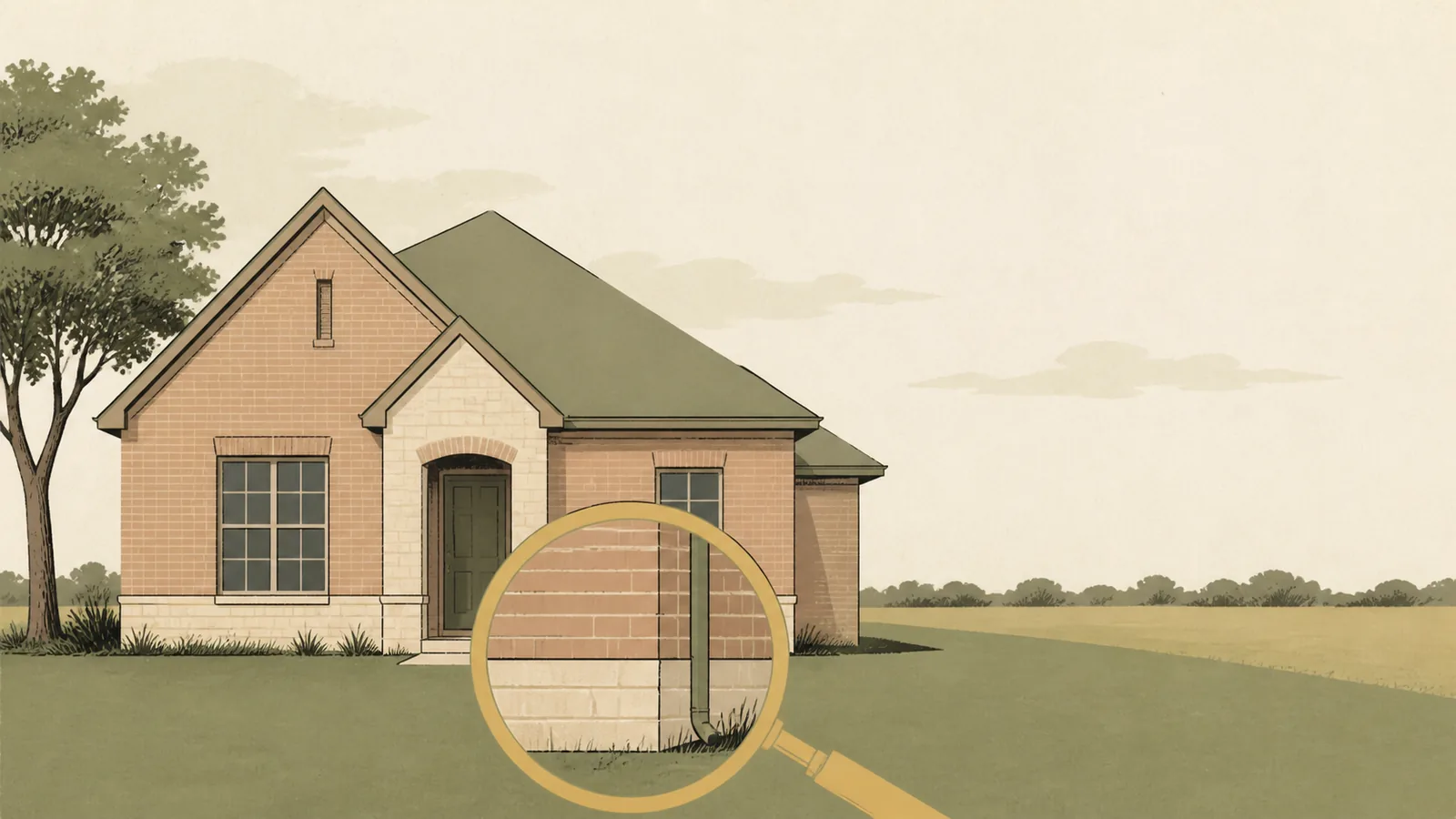
Is a Pre-Listing Inspection Worth It in Texas?
It costs a few hundred dollars and changes what you are legally required to disclose. When that trade is clearly good, and when it is clearly not.
A pre-listing inspection buys you control and costs you ignorance, and whether that is a good trade depends almost entirely on how old the house is and how much surprise you can tolerate mid-contract.
The Trade You Are Making
What you gain:
- Time.You can fix things on your schedule, get several quotes, and use your own contractors rather than working to a buyer’s deadline.
- Price. Repairs done in advance cost what repairs cost. Repairs negotiated during an option period cost what the buyer thinks they cost, which is usually more.
- Certainty. The single biggest cause of a deal collapsing during the option period is a finding neither party expected. Knowing in advance removes it.
- Positioning. A house presented with a report and receipts is a house that has clearly been looked after, which changes how buyers read everything else about it.
What you give up: the ability to not know. Which is the whole of the next section.
The Disclosure Consequence
The Texas Seller’s Disclosure Notice asks what you know about the property. An inspection report makes you know things.
So a defect found by your own inspector is a defect you must disclose, whether or not you fix it. You cannot commission a report, dislike its contents and put it in a drawer. That is not a technicality; it is the central legal fact about this decision.
Most sellers should read that as a reason to do it rather than a reason not to. The alternative to knowing is not the defect going away, it is the buyer’s inspector finding it in three weeks, at which point you are negotiating under a deadline with less information than the other side and with a buyer who now wonders what else you did not know.
The sellers who genuinely should hesitate are covered below. The current disclosure requirements, including the forms that changed in 2026, are in the seller’s disclosure guide.
When It Is Clearly Worth It
- The house is older than about twenty-five years. Systems are at or past their first replacement cycle and there is more to find.
- You have owned it a long time and genuinely do not know its current condition. Owners stop seeing their own houses.
- It is an inherited or investment property you have never lived in. You have no experiential knowledge at all. Selling an inherited house.
- You suspect a foundation issue. Getting ahead of this is worth more than getting ahead of anything else in this region, because uncertainty about a foundation discounts a house far more than a documented, repaired one does. Why documentation beats silence.
- You cannot tolerate a deal falling apart. If you have bought a house contingent on this sale, certainty is worth paying for.
- The roof is old. In North Texas the roof is the item most likely to affect insurability as well as price. Why the roof decides the insurance.
When It Is Not
- The house is nearly new and still under builder warranty. There is little to find and the warranty covers the rest.
- You are selling as-is to an investor or cash buyer who is pricing the condition themselves and will inspect regardless.
- You have recently completed a major renovation with permits and receipts and know exactly what was done.
- You will not act on anything it finds. If you have no budget and no intention to fix or price, you are buying disclosure obligations without buying the benefit. That is a real argument, and it usually means you should reconsider the price rather than the inspection.
How to Use the Report If You Get One
- Sort the findings into four buckets. Safety, expensive and imminent, expensive and eventual, and cosmetic. This is the same triage a buyer will do. How the triage works.
- Fix the safety items and the cheap ones. Anything that reads as neglect: the running toilet, the missing outlet cover, the sticking door. These cost very little and they change how a buyer reads the whole house.
- Get real quotes on the expensive items. Two of them. Then decide whether to fix, credit, or price.
- Disclose everything you now know. Completely and in writing.
- Present the report and the receipts.Put them in the folder that sits on the counter at showings. Transparency in this market is a competitive advantage rather than a liability, because it removes the buyer’s worst-case assumption.
- Expect the buyer to inspect anyway. They should, and their inspector may find things yours did not. Your report is not a substitute for theirs; it is a way of making sure their report contains nothing that surprises either of you.
The overall discipline: an inspection report is a pricing document as much as a repair list. Once you know the condition, you can choose a price that reflects it and defend that price with evidence, which is a far stronger position than discovering the same information three weeks into a contract. How to price properly.
Frequently Asked Questions
What is a pre-listing inspection?+
It is a standard home inspection ordered by the seller before the property goes on the market, rather than by the buyer after a contract. It gives the seller the same information the buyer's inspector would find, in advance, so decisions about repairs and pricing can be made before the negotiation rather than during it.
Do I have to disclose what a pre-listing inspection finds in Texas?+
Yes. The Texas seller's disclosure notice asks about known defects, and an inspection report makes you knowledgeable about anything in it. That is the central trade: you gain control and lose the ability to say you did not know. Most sellers should regard the loss of that ignorance as a good thing rather than a cost.
Does a pre-listing inspection help a house sell faster?+
It can, because it removes the largest source of mid-contract renegotiation and the associated risk that a deal collapses during the option period. It also lets you fix items on your own schedule and with your own contractors, which is nearly always cheaper than fixing them under a deadline with a buyer watching.
Should I fix everything a pre-listing inspection finds?+
No. Fix safety items, anything a lender or insurer will object to, and the small things that make a house look neglected. Price the rest into your expectations. A report with forty items on it describes an ordinary used house, and trying to deliver a perfect one before listing is how sellers spend money they never recover.
Can I show buyers my pre-listing inspection report?+
You can, and many sellers do, alongside receipts for anything they fixed. It builds credibility and shortens the buyer's own diligence. Buyers will still order their own inspection, and they should, but arriving to a house whose seller has already been transparent changes the tone of the whole transaction.
Run Your Own Numbers
About the Author

Licensed Realtor · DFW North Texas
Specializing in Plano, Frisco, McKinney, and Allen. Helping buyers and sellers navigate North Texas since 2015, with honest advice, deep local knowledge, and no pressure.
You Might Also Like
Selling a Texas Home in Probate: The Short Version
Independent administration makes Texas one of the easier states for this. What determines whether you get it, and the affidavit that can skip probate entirely.
· 6 min read
Divorce and the House in Texas: Four Outcomes, Ranked by Cleanliness
Community property, a deed that does not release the loan, and the owelty lien most people have never heard of. What each path costs and how long it takes.
· 6 min read
What a Texas HOA Can and Cannot Make You Do
State law overrides deed restrictions in more places than owners realise: solar, flags, religious displays, rain barrels, and a real foreclosure power.
· 6 min read